
Manuals teach tools, not operations
A certification proves you can configure a firewall. It says nothing about the night the green dashboard and the broken business transaction coexist, and someone has to decide.
A DAILYOPS PUBLICATION · THE OPERATOR’S LIBRARY
We design, build, operate and depend on increasingly complex systems. The Operator’s Library examines the technical, human and organizational realities of keeping them reliable, secure and governable. Not manuals, not war stories, not academic theory: six field essays written by an operator, for operators.
Written by Steve Ba-Ndouwe, cybersecurity engineer, digital forensics investigator and creator of DailyOps.Tech.
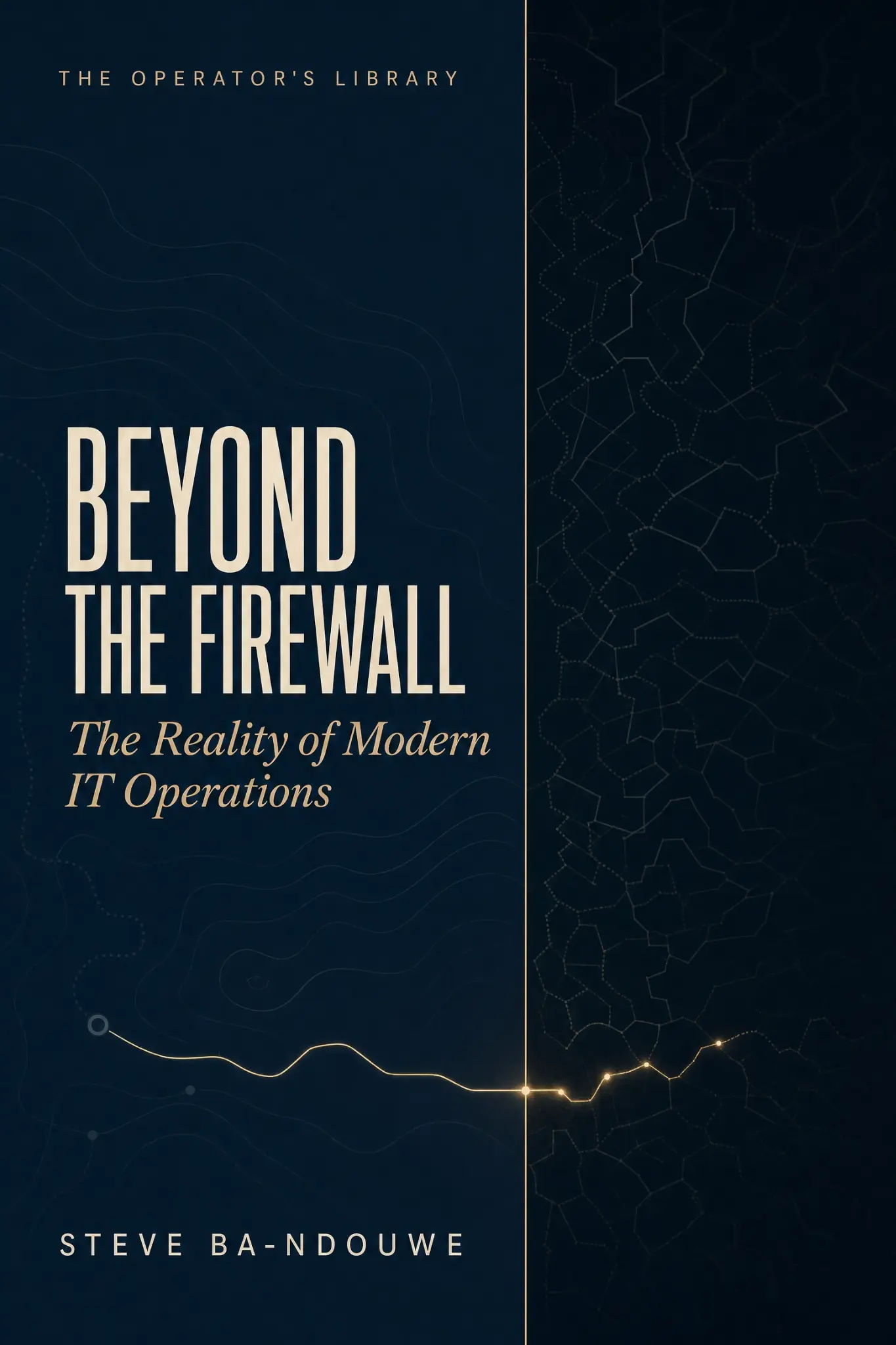
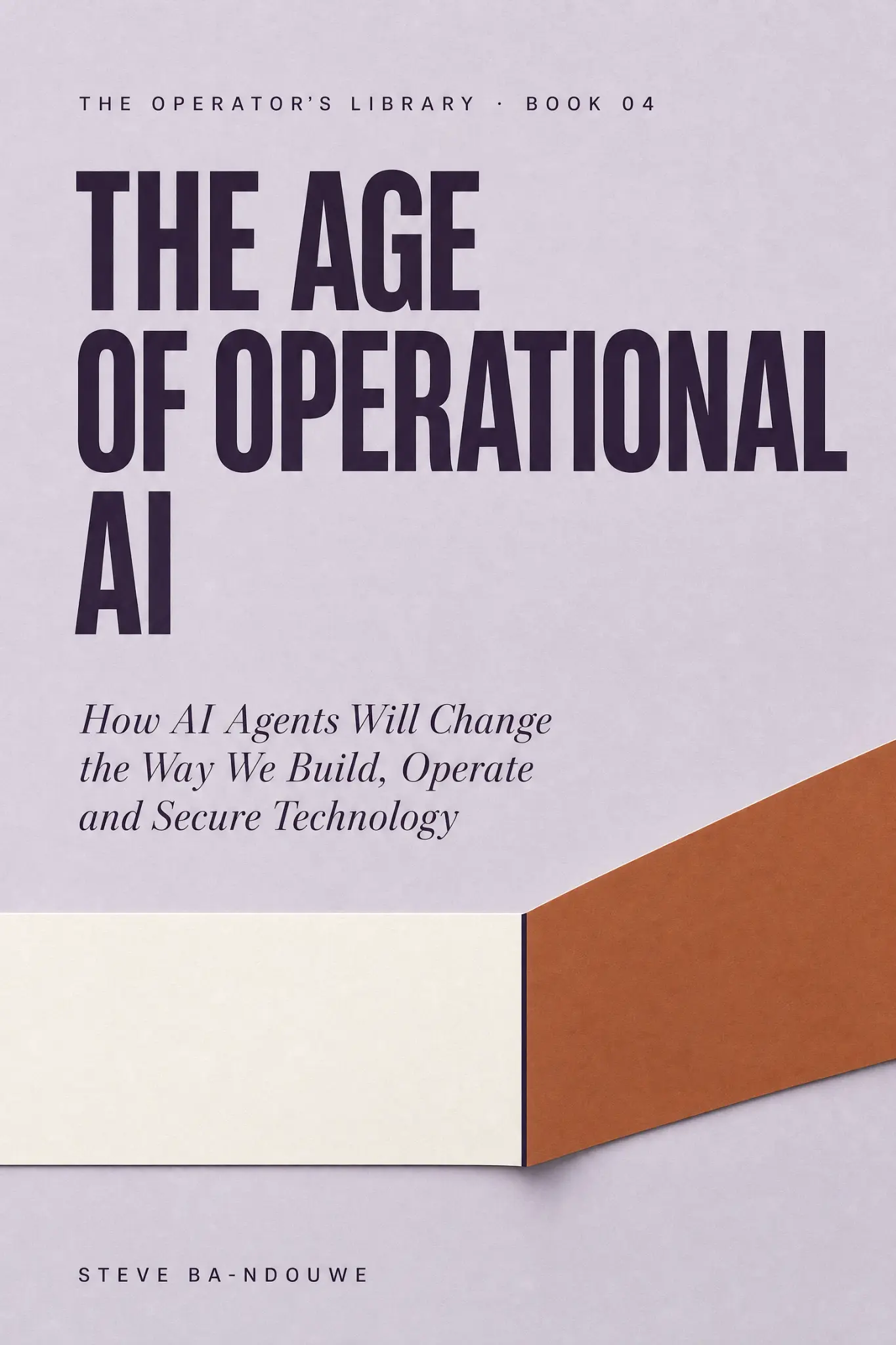

WHY THIS LIBRARY EXISTS
Tool manuals teach configuration. Academic texts teach theory. Vendor content teaches fear. The actual craft of operating complex systems under pressure lived nowhere.
A certification proves you can configure a firewall. It says nothing about the night the green dashboard and the broken business transaction coexist, and someone has to decide.
Incident retellings make great conference talks. Without method, they remain anecdotes you cannot bring back to your own on-call shift.
Dependencies, handoffs, exceptions that stayed, decisions that never expired. The system that actually determines whether work is possible has no manual. These books are its field guide.
THE METHOD
The writing follows one discipline across all six volumes: the concrete before the abstract, the mechanism before the lesson, the evidence before the verdict.
Real incidents, textured but anonymized: a 200-person B2B scale-up on AWS in March, a certified firewall and a green dashboard while orders fail. Each note closes with five fields: context, expected, actual, what was forgotten, the lesson.
Every rule is three observable decisions, not a slogan. Name what fails before you confirm. Give every rule an owner and an expiry. Automate the reversible, protect the judgment.
Each chapter lands on a line that can live alone: Complexity is not what you add to the diagram, it is what the diagram can no longer explain. Sentences you can carry to your next incident review.
Six books share one question, what actually decides whether a system can be operated, and each can be read on its own. Start where your current problem lives.
THE SIX VOLUMES
Each volume stands alone. The covers and samples are real, and every publication state is announced.
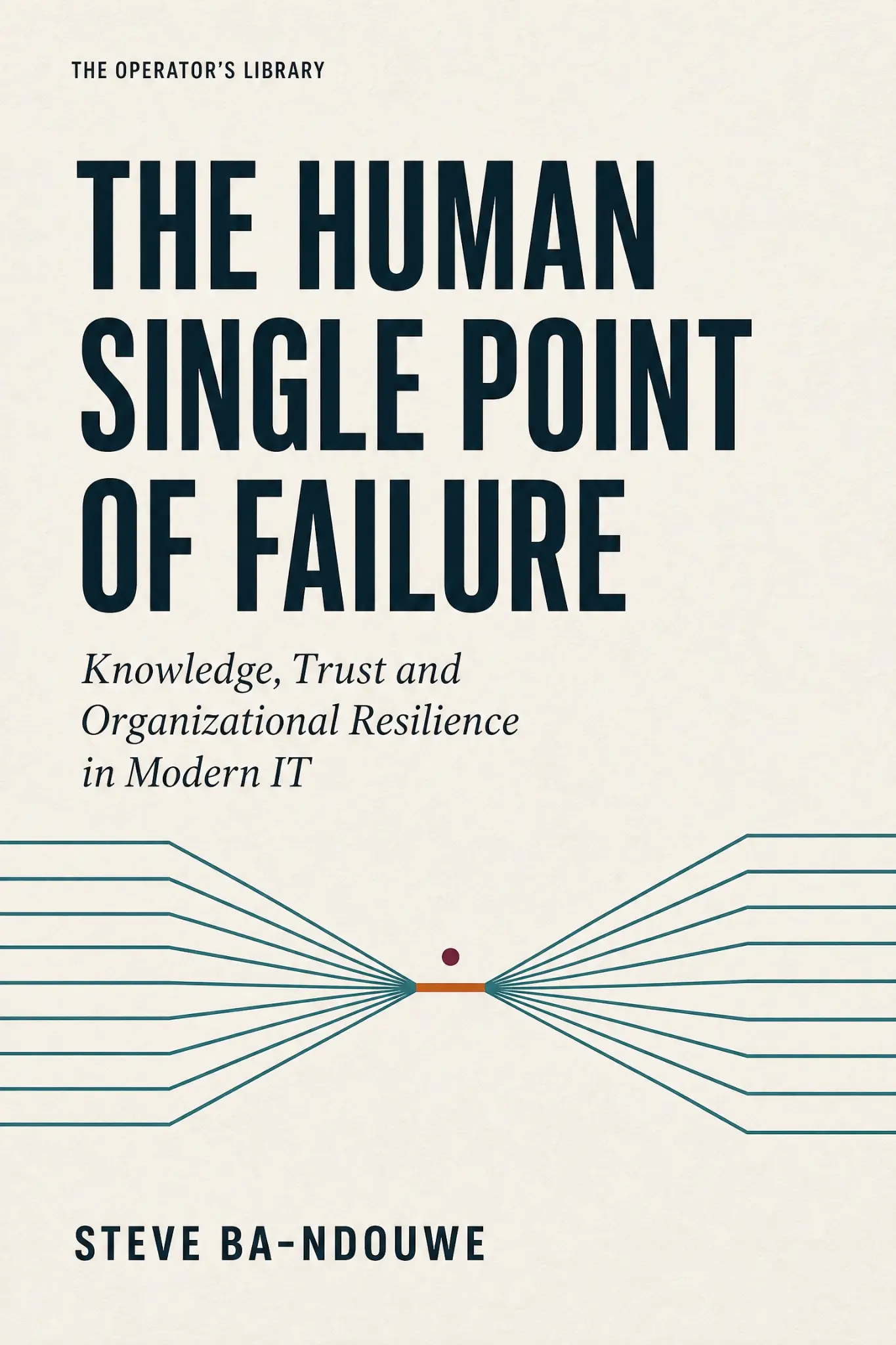
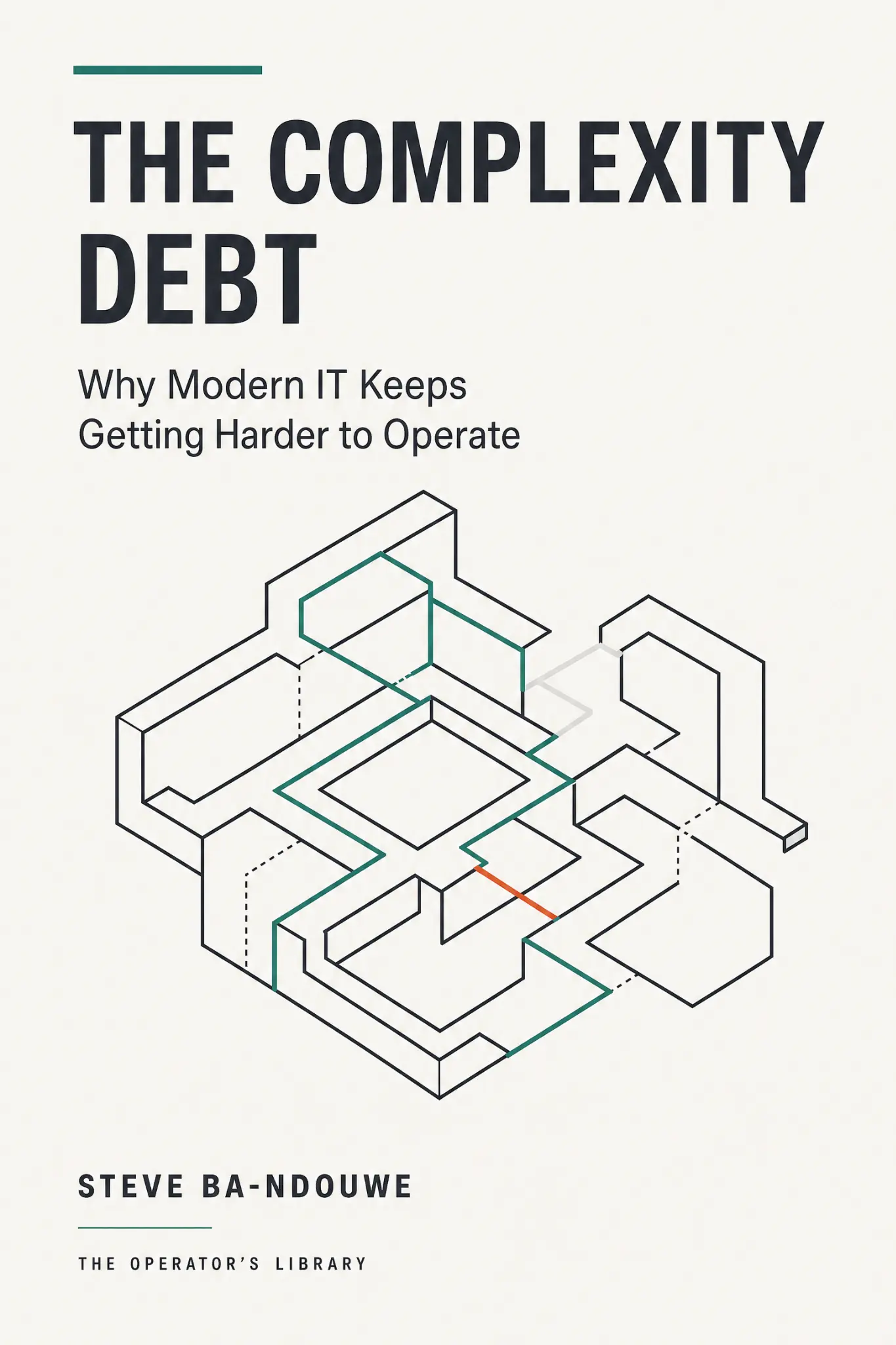
THREE ARCS, SIX VOLUMES
The series moves through three arcs. Each volume examines one layer of the system that operators actually inherit.
Volumes 01 and 03. The perimeter that says green while the transaction fails, and the complexity that accumulates one reasonable decision at a time.
Volume 02. The held context, the unsafe handoff, and the ordinary team that must be able to make a safe next decision without finding a hero.
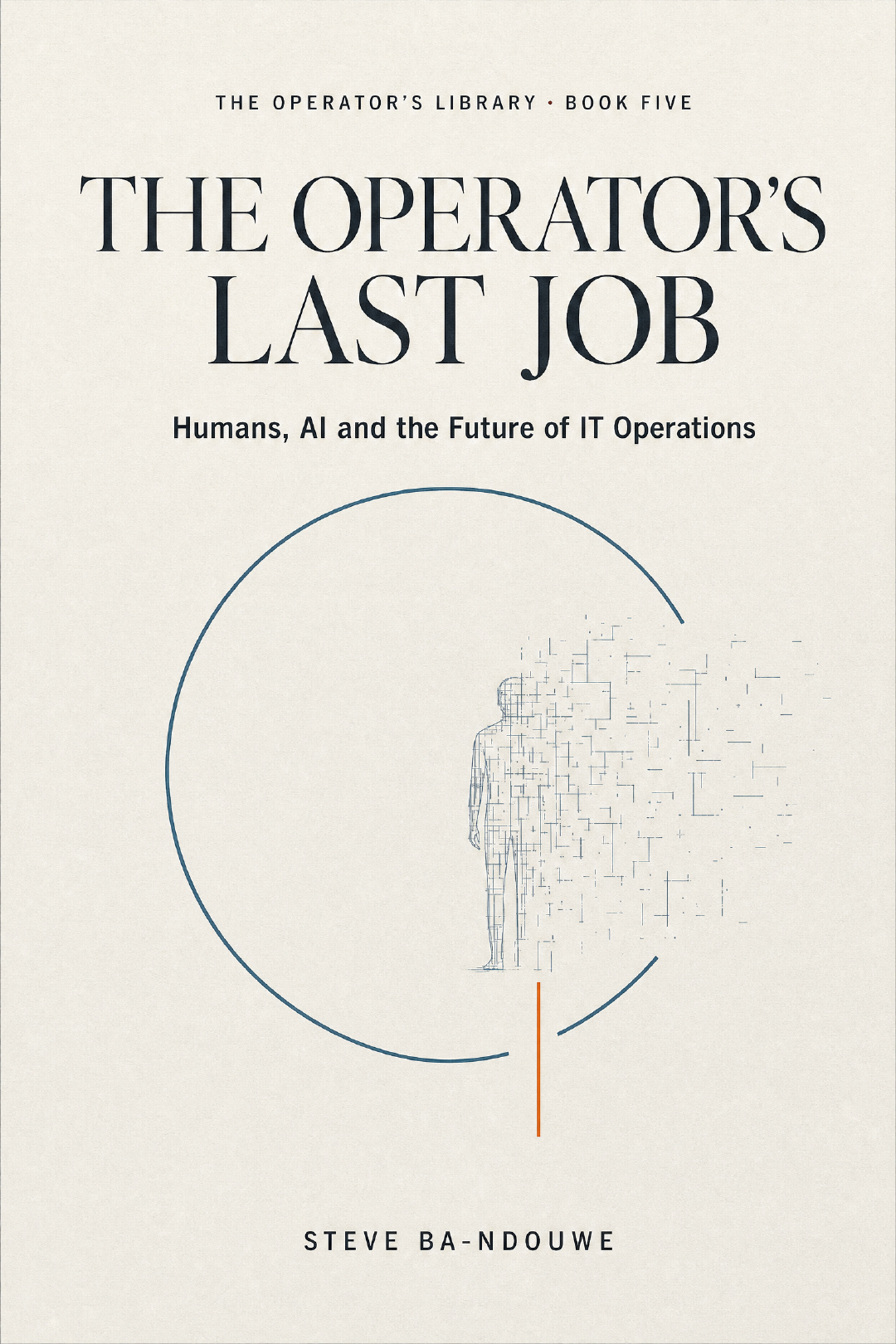
Volumes 04, 05 and 06. AI agents that act, the security stack when both sides reason, and the operator’s final responsibility: judgment.
START READING
You do not have to wait for a print run to enter the library. The reading room on DailyOps.Tech already holds selected pages.
Each published or proof volume has seven selected pages online, free, on the DailyOps reading desk: the argument, the method and one field note, chosen to represent the book honestly.
Start with Beyond the Firewall for the foundational gap between signal and service, or jump straight to The Age of Operational AI if agents are already your present. The recommended order is 01, 02, 03, 04, 06, 05.
The reading brief, the DailyOps newsletter, announces each manuscript milestone, sample release and print availability. One email, when there is real news.
Volumes are typeset in professional 6×9 inch print and EPUB formats, prepared for worldwide distribution. Volume 01, Beyond the Firewall, is the pilot, already compiled in PDF, EPUB and print layouts.
PUBLISHING DISCIPLINE
The library follows the same rule as the DailyOps field notes: publish what you can stand behind, and say precisely what you cannot yet.
Volume 02 shows its editorial direction and reading points, and no manuscript excerpt, because the manuscript is not yet at a stage that can be shared honestly. The library would rather show less than pretend more.
Until a real ISBN is attributed, covers keep their barcode zone empty. The library does not decorate; it documents. Publication procedures follow AFNIL and standard print distribution channels.
Typeset with Pandoc and XeLaTeX through a reproducible build, in 6×9 inch print format for worldwide print-on-demand, with A5 as the European variant, and EPUB for e-readers.
QUESTIONS
Engineers, operators, SREs and security leads who run real systems, plus the CTOs, CIOs and CISOs who answer for them, and consultants who need a language their clients recognize.
No. Each volume stands alone. If you want the full arc, the recommended order is 01, 02, 03, 04, 06, 05, closing on the question of the operator’s final role.
Print and ebook distribution is in preparation through standard channels. Volume 01 is production-ready. Announcements go through the DailyOps reading brief, and samples are already free online.
No. Seven pages per volume, chosen to represent the argument honestly: an opening, a method page and a field note. The full volumes go deeper, chapter by chapter.
Steve Ba-Ndouwe, cybersecurity engineer and digital forensics investigator, creator of DailyOps.Tech. He wrote the books he kept wishing existed while working on call.
Read the free samples in the DailyOps reading room, and join the reading brief to know the moment a new volume becomes available.
Need a hand? I can help with guides and tech topics.